

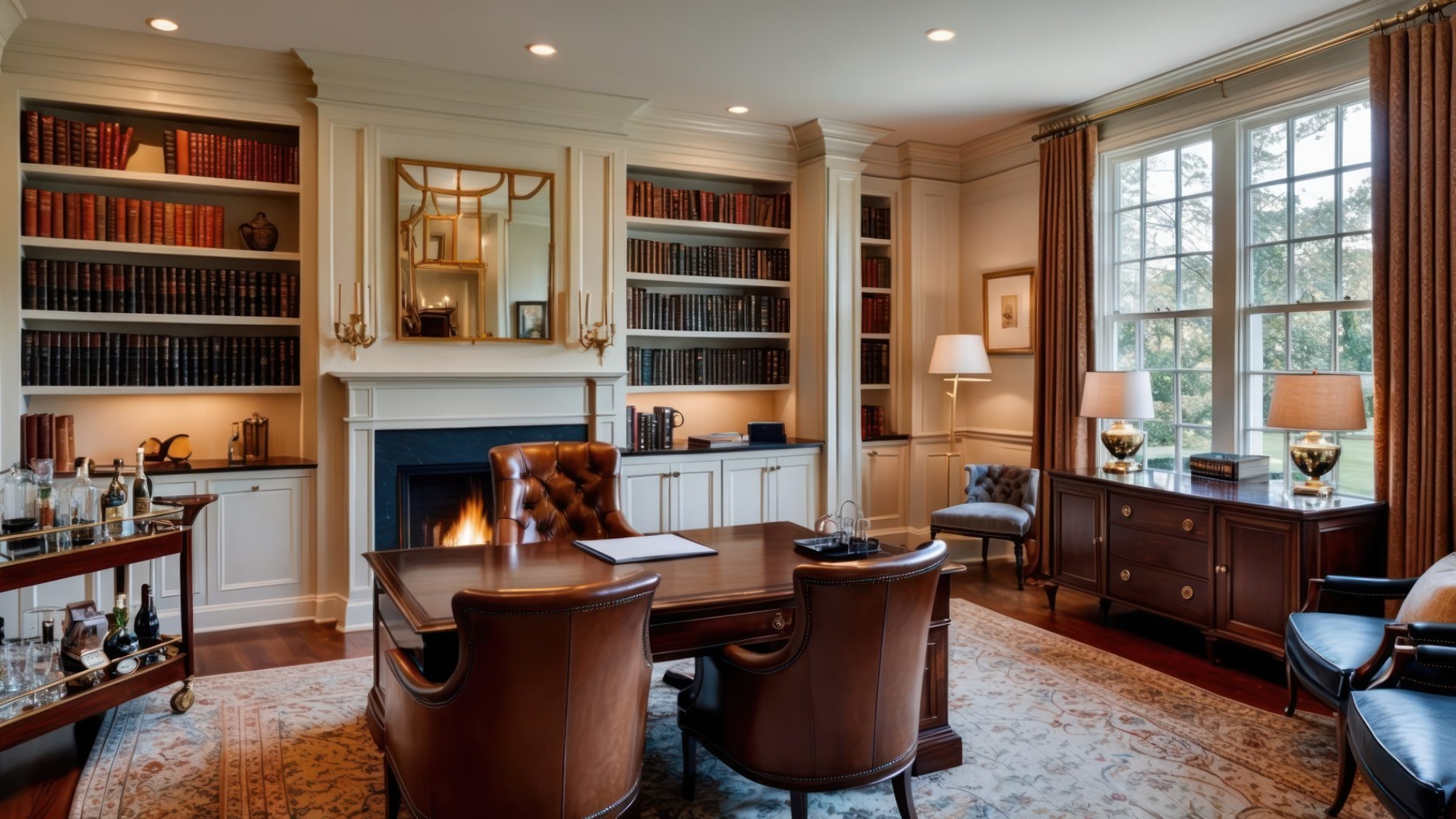
There are some interiors that never seem to belong to a particular decade. They feel established without feeling old, comfortable without feeling casual, and polished without looking overly designed. This classic, equestrian-inspired style is one of those looks.
Picture a worn leather chair with softened edges, a patterned wool throw casually draped across the back, warm brass lighting, traditional artwork, dark wood, and a rug that looks as though it has been part of the room for years. The overall effect is refined but relaxed — traditional, layered, and unmistakably lived-in.
What makes this style so appealing is that it doesn't depend on perfection. In fact, a little wear and character are part of what gives the room its personality. Materials become more beautiful as they age, patterns feel better when they aren't perfectly coordinated, and furniture looks more interesting when it seems to have a story behind it.
At its heart, this aesthetic combines classic tailoring with rustic warmth. It draws inspiration from equestrian traditions, heritage interiors, classic Americana, old libraries, country houses, and timeless menswear. But rather than reproducing any one of those influences literally, the goal is to create a room that feels collected over time.
And that's really the secret: the room should look assembled, not purchased.
Start With a Focused Color Palette
The color palette is one of the easiest ways to establish this look because it creates a visual thread that allows all of the patterns and textures to work together.
Think deep green, navy, chocolate brown, warm burgundy, and rich saddle tones. These colors can appear throughout the room in different ways — on the walls, in upholstery, through rugs, in artwork, or in smaller decorative details.
The key isn't to use every color equally. Instead, choose one or two dominant shades and let the others appear naturally throughout the space.
For example, a deep green wall might be repeated in a patterned pillow, while a warm burgundy appears in a rug and a piece of artwork. A dark brown leather chair can then bridge the palette through both color and texture.
Repetition is what makes a layered room feel intentional.
When the same color appears in several different places, your eye begins to connect those elements. The room feels cohesive without looking overly coordinated.
And if dark walls feel intimidating, there's no need to start there. Introduce the palette gradually through furniture, textiles, artwork, and accessories. Once you see how those pieces work together, you can decide whether the walls need a deeper treatment.
Let Pattern Do the Talking
This style isn't afraid of pattern.
Plaids, tartans, stripes, houndstooth, checks, and traditional motifs can all work beautifully together. The trick is not necessarily to use fewer patterns — it's to use different scales and visual weights.
A large-scale plaid might work on a chair or ottoman. A medium stripe could appear on a pillow or throw. A smaller check or houndstooth can fill in the details.
When patterns are all competing at the same scale, the room can feel chaotic. When they vary in size, they create rhythm.
Color is equally important. If several patterns share the same core palette, they can coexist surprisingly well.
You don't need to decorate the entire room in one afternoon, either. Start with two patterns you genuinely love. Live with them for a while, then introduce another layer when the room starts to tell you what it needs.
The result should feel collected rather than calculated.
Build the Room Around Texture
If there is one element that can instantly make this style feel authentic, it's texture.
Leather brings age and warmth. Wool adds softness. Tweed introduces visual depth. Linen keeps the room from becoming too heavy. Dark wood adds richness, while aged brass contributes a subtle glow.
Think about materials that become more interesting with time.
A leather chair with natural variations is often more compelling than a perfectly pristine one. Brass with a slightly aged finish can feel warmer than something highly polished. Wood with visible grain gives a room a sense of permanence.
The goal isn't to make everything look old. It's to combine materials that have enough character to prevent the room from feeling brand-new.
That's also what makes this approach surprisingly accessible. You don't need every piece to come from a high-end collection. A well-chosen secondhand lamp, vintage frame, wool throw, or weathered wooden table can contribute more character than a room filled with perfectly matched new pieces.
The Leather Chair That Starts It All
If you're not sure where to begin, start with one substantial piece.
A leather club chair is an especially effective starting point because it immediately introduces color, texture, structure, and a sense of history.
From there, build outward.
Add a soft throw. Bring in a patterned pillow. Place a warm-toned rug underneath. Introduce a brass lamp nearby. Add artwork above or beside it.
One strong piece can give the rest of the room a direction.
And don't worry if the leather isn't flawless. Small marks, variations, and signs of use can actually make the room feel more authentic.
Warm Metals and Dark Wood
Metal and wood help balance the softer layers of textiles and upholstery.
Aged brass works particularly well because it adds warmth without creating too much shine. Brass lamps, sconces, frames, trays, and small decorative objects can all contribute to the look.
Dark woods such as walnut and mahogany can provide the same sense of depth.
The important thing is to avoid making every finish identical. A room becomes more interesting when the wood tones, metals, and textures have subtle variation.
A little imperfection keeps the space from feeling like a showroom.
Create a Collected Gallery Wall
Artwork is another major part of this aesthetic.
Traditional frames in warm wood, aged brass, or darker finishes can instantly make a room feel more established. Landscape paintings, vintage-style prints, botanical studies, black-and-white photography, and antique-inspired artwork can all contribute to the atmosphere.
You don't need a perfectly coordinated gallery wall.
In fact, a collection of pieces that appear to have been gathered at different times often feels much more convincing. Mix sizes, frames, subjects, and textures while keeping the overall color story connected.
For surfaces, think in layers rather than isolated objects.
A small stack of books, a decorative box, a vintage-inspired object, a bowl, or a simple arrangement of dried branches can make a console, coffee table, or shelf feel naturally styled.
The Finishing Touch: Imperfection
One of the easiest ways to lose the character of this style is to make everything too polished.
Perfectly matched furniture, high-gloss finishes, overly shiny metals, and identical patterns can make a room feel newly assembled.
Instead, allow some contrast.
Pair polished surfaces with aged ones. Combine structured furniture with soft textiles. Mix new pieces with vintage finds. Let a rug show a little wear. Allow brass to develop character. Choose materials that don't all look as though they came from the same collection.
The beauty is in the tension between refined and relaxed.
Why Secondhand Pieces Work So Well
This is one of those design styles where shopping secondhand can actually make the room better.
The qualities you're looking for — patina, variation, wear, craftsmanship, and character — are often easier to find in older pieces than in brand-new ones.
Look for leather chairs, traditional lamps, framed artwork, brass accessories, wooden furniture, wool blankets, patterned textiles, antique-style mirrors, and classic decorative objects.
Search broadly and be patient.
Furniture marketplaces, estate sales, vintage shops, antique markets, and local resale sources can all be useful places to find pieces with the right character. The goal isn't to recreate someone else's room piece by piece. It's to find individual objects that feel as though they could naturally belong in yours.
Can This Style Work in a Small Room?
Absolutely.
In fact, a smaller room can be an ideal place to experiment with darker colors, richer textures, and layered patterns.
A deep wall color can make a compact space feel intimate rather than cramped. Heavy curtains, a leather chair, a warm lamp, and a patterned rug can create a cozy atmosphere without requiring a large footprint.
The key is balance.
If the walls are dark, introduce lighter textiles or small areas of contrast. If the room has several patterns, give the eye a few quieter surfaces. If the furniture is substantial, keep some open space around it.
A small room doesn't need less personality. It simply needs a more deliberate arrangement.
The Bigger Idea
Ultimately, this style isn't about copying a particular designer, room, or era.
It's about creating a home that feels established, comfortable, layered, and personal.
Choose a restrained palette. Mix traditional patterns. Bring in natural materials. Add warm metals. Look for furniture with character. Let artwork feel collected. And don't be afraid of a little wear.
The most successful rooms in this style don't look as though they were finished in a single decorating session. They look as though they evolved over time — one chair, one painting, one lamp, and one favorite textile at a time.
That's what makes the look feel timeless.
Quick Guide
What defines this classic equestrian-inspired style?
A layered traditional interior built around deep colors, natural materials, generous patterns, warm metals, dark wood, and pieces that feel collected over time.
Which colors work best?
Deep greens, navy, chocolate brown, burgundy, saddle tones, and warm neutrals create a strong foundation. Cream, oatmeal, and muted beige can provide contrast without disrupting the mood.
How many patterns can you mix?
As many as the room can comfortably handle. Focus on varying the scale of the patterns and keeping their colors connected rather than limiting yourself to a specific number.
Does everything need to be vintage?
Not at all. The goal is character, not age. Combine new pieces with vintage or secondhand finds so the room feels layered rather than themed.
What should you buy first?
Start with one substantial piece that establishes the direction of the room — a leather chair, traditional rug, dark wood table, or distinctive lamp can all serve as a strong foundation.