

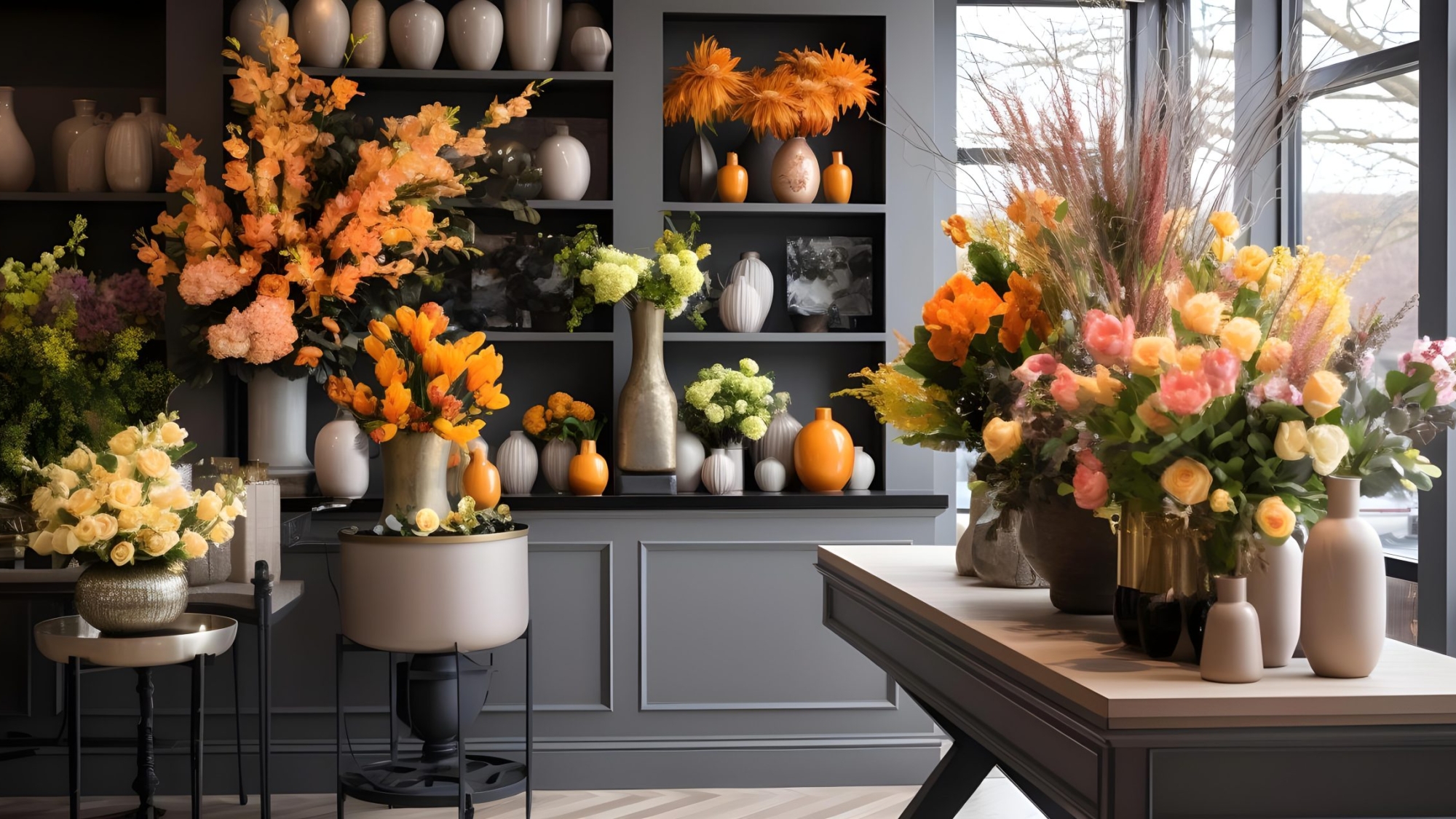
Fall decorating doesn't have to mean covering every surface in pumpkins, plaid, and seasonal signs.
Sometimes, the feeling of fall comes from something much quieter.
The sun disappears a little earlier. Lamps start glowing in the corners of the room. A candle burns on the coffee table. Blankets become part of the everyday routine, and suddenly the house feels warmer, deeper, and a little more inviting.
That shift is what makes a room feel like fall.
The most successful seasonal spaces usually aren't built around one obvious decoration. Instead, they combine warm light, richer color, and layers of texture until the room begins to feel different without looking completely transformed.
There are plenty of ways to introduce texture this time of year. Wool throws, velvet pillows, woven baskets, leather accents, aged wood, and heavier fabrics can all make a room feel more grounded.
But one of the easiest changes might be right in front of you: branches.
The Easiest Way to Bring Fall Indoors
In warmer months, decorating tends to feel lighter.
Large flowers, airy greenery, soft colors, and abundant blooms can make a room feel fresh and open. As the season changes, it can be nice to let the decorations change with it.
Instead of oversized summer blooms, try branches with crisp leaves, muted greens, rusty browns, faded reds, or deep plum tones.
They don't have to scream "fall."
In fact, the most convincing seasonal arrangements often feel as though they could have been gathered from outside and casually brought indoors.
That's what makes branches so useful. They add color and movement without taking over the room.
A few stems in a tall vase can completely change an entryway. A loose arrangement on a dining table can make an everyday meal feel more seasonal. A single branch on a kitchen counter can add just enough color to signal that the season has shifted.
And unlike many holiday-specific decorations, branches can stay out for weeks without feeling dated.
Why Faux Branches Work So Well
Real branches are beautiful, but they aren't always practical.
They dry out, shed leaves, need water, and can be difficult to keep looking fresh for very long. Faux stems solve that problem while still giving you the height, movement, and texture you're looking for.
The trick is choosing ones that don't look too perfect.
The goal isn't to make an arrangement look artificial in a more convincing way. It's to make it look slightly imperfect — the way something growing in nature would actually look.
That means branches shouldn't all point in the same direction.
Leaves shouldn't be evenly spaced.
Stems shouldn't all be the same height.
And the arrangement shouldn't look like it was assembled with a ruler.
A little irregularity goes a long way.
The First Step Happens Before the Vase
One of the biggest mistakes people make with faux stems happens immediately after taking them out of the packaging.
They place them straight into a vase.
The branches are still compressed from shipping, the leaves are sitting close together, and every stem is pointing in roughly the same direction. The result can look stiff and manufactured, even when the stem itself is beautifully made.
Instead, take a few minutes to reshape everything.
Pull individual leaves and smaller branches away from one another. Bend the stems gently. Rotate some branches outward and allow others to angle slightly inward.
Think about how a real tree grows.
Nothing in nature is perfectly symmetrical.
Some branches reach toward the light. Others curve away. Leaves overlap at different angles, and individual stems have their own direction.
Try to recreate that irregularity.
This small adjustment can completely change the way faux greenery or branches look.
Don't Be Afraid to Bend Them
It can feel strange to manipulate a new decorative stem, especially when it arrives looking perfectly arranged.
But that's exactly why it needs to be adjusted.
Bend the branches until they begin to have some movement. Create a little height difference. Let a few leaves sit farther away from the center of the arrangement.
You don't want every branch to create an identical silhouette.
Instead, think about creating a loose shape with plenty of breathing room.
Sometimes the most natural-looking arrangement is the one that looks like you barely arranged it at all.
That effortless quality usually takes a little more effort than people realize.
Use Floral Foam When You Need More Control
There are times when simply placing branches into a vase isn't enough.
This is especially true when you're trying to create a sparse arrangement with only a few dramatic stems.
Without anything holding them in place, the branches tend to slide toward the center of the vase. Eventually, everything leans together and the shape becomes much more compact than you intended.
A small amount of floral foam at the bottom of the vessel can help.
It gives each stem an anchor, allowing you to position branches exactly where you want them. You can angle one toward the left, another toward the right, and keep a taller branch reaching upward.
This is particularly useful when the arrangement is intentionally minimal.
Three or four branches can look much more impactful when they're spread naturally rather than crowded together in the middle.
Keep Your Stems Long
Another useful trick is one that makes seasonal decorating much easier later.
Don't immediately cut your stems to fit the vase.
Instead, bend the excess portion at the bottom back upward inside the vessel.
Why?
Because a stem that's too long can always be adjusted.
A stem that's too short can't be made longer.
Keeping that extra length gives you options when you move the arrangement into another room, switch to a taller vessel, or restyle your home for a different season.
The same branches that work in a short vase on a console table might look completely different in a taller vessel on a mantel.
Think of your faux stems as pieces you're going to reuse rather than decorations for one specific arrangement.
That small mindset shift can make a collection much more versatile.
Let the Vase Do Some of the Work
The vessel matters almost as much as the branches.
A beautifully shaped vase can make even a simple arrangement feel intentional.
For fall, vessels with warmer finishes tend to work especially well: aged ceramic, dark glass, natural stone, wood, metal, or textured pottery.
But don't feel limited to traditional fall colors.
A neutral vessel can create a softer look, while a darker one can make muted branches feel richer and more dramatic.
The key is contrast.
If your branches are visually busy, choose a quieter vase. If the stems are simple and sparse, the vessel can have more shape or texture.
The two pieces should support each other rather than compete.
The Beauty of a Sparse Arrangement
More isn't always better.
One of the easiest ways to make faux branches look artificial is to use too many.
When every inch of the vase is filled, the individual stems disappear into one another. The arrangement starts to look dense and overly constructed.
A few well-positioned branches can have much more impact.
Let some of the stems stand alone. Allow open space between leaves. Give the branches room to create shadows on the wall behind them.
That negative space is part of the arrangement.
It makes the stems feel lighter and more organic, and it allows the shape of each branch to become part of the room.
Choosing Colors That Feel Like Fall
Fall color doesn't have to mean bright orange.
Some of the most beautiful seasonal palettes are surprisingly muted.
Think:
- Weathered green
- Rust
- Faded burgundy
- Deep plum
- Warm brown
- Soft amber
- Dusty red
- Muted gold
- Natural tan
These colors tend to work beautifully with the materials already found in a home during fall — wood, leather, wool, linen, stone, and aged metals.
And because they're relatively understated, they don't necessarily need to be removed the moment October ends.
A branch with muted brown leaves can transition easily from early fall into Thanksgiving and even into the beginning of winter decorating.
Faux Doesn't Have to Mean Disposable
High-quality faux stems can be surprisingly expensive.
If you're filling a large vase or decorating several rooms, the cost can add up quickly.
But there is another way to look at the investment.
Unlike fresh flowers, a well-made faux branch doesn't disappear after a week. It can be stored carefully and brought out year after year.
That makes the initial cost easier to justify, especially when you choose pieces with a natural shape and a timeless color palette.
Instead of thinking about faux stems as seasonal decorations, think of them as part of your home's decorating collection.
You can pull them out every fall, move them between rooms, combine them with different vessels, and even use certain branches outside the traditional fall season.
The more versatile the piece, the more useful it becomes.
Look for the Expensive Look Without the Expensive Price
There are also plenty of budget-friendly options that can create a similar effect.
When shopping, don't focus only on the price. Pay attention to the details that make a faux stem look convincing.
Look closely at:
- The shape of the leaves
- Variation in color
- The texture of the branches
- Whether the stems bend naturally
- How densely the leaves are attached
- Whether the finish looks matte or overly shiny
Sometimes a less expensive stem can look surprisingly realistic once it has been properly shaped and placed in the right vessel.
And because arrangements are usually viewed from a few feet away, small differences may be difficult to notice once the stems are mixed together.
You can also combine pieces.
There is no rule saying every branch in a vase has to come from the same collection or even have the exact same finish. Mixing subtle variations can actually make the arrangement feel more natural.
Think Beyond the Entryway
Once you have a few versatile stems, don't limit them to one room.
Try a tall arrangement near the front door. Place a smaller branch on a kitchen counter. Add a few stems to a dining table. Use one dramatic branch on a mantel or bookshelf.
Even a bathroom can benefit from a small seasonal arrangement.
The goal isn't to decorate every room equally.
Instead, repeat small hints of the same colors and textures throughout the house.
A rust-colored branch in the entryway might echo a muted pillow in the living room. A dark plum accent might reappear in the dining room. Warm wood tones can connect everything together.
Those repetitions make seasonal decorating feel intentional without becoming overly coordinated.
Make Fall Feel Like Fall
The best seasonal decorating doesn't necessarily announce itself.
You walk into the room and simply notice that it feels warmer.
The lighting is softer. The colors are deeper. The fabrics feel heavier. A few branches catch the afternoon light. There are more layers, more texture, and a little less of that bright, airy feeling that belongs to summer.
That's the atmosphere we're really trying to create.
Faux branches are just one small piece of it, but they're an especially easy one.
They bring the changing season indoors without requiring a complete room makeover. They can be rearranged, reshaped, stored, and brought back year after year. And when they're chosen thoughtfully, they can look less like seasonal decor and more like something that simply belongs in the room.
So before you fill the house with obvious fall decorations, try starting with something quieter.
Turn on a lamp.
Light a candle.
Add a few imperfect branches to a vase.
Pull a wool throw over the arm of the sofa.
Let the colors deepen.
Sometimes that's all it takes to make a home feel like fall.