


Beyond the Screen: The New Era of Home Entertainment

Home entertainment has changed dramatically over the years. What was once centered around a single television and a collection of physical media has developed into a broader experience involving high-quality displays, wireless audio, streaming platforms, gaming systems, ambient lighting, and connected accessories.

The most interesting change is not simply that screens have become larger or sharper. Entertainment is becoming more immersive, flexible, and integrated into the character of the room itself.

A living space can now transform depending on what someone wants to watch, listen to, play, or experience.

The Television Is No Longer the Whole Story

The modern display remains an important part of home entertainment, but it increasingly functions as one component within a larger environment.

High-resolution content can be combined with sophisticated audio, streaming services, gaming equipment, and connected accessories. Instead of treating the television as an isolated object, users can build an entertainment environment around it.

This approach changes how a room is experienced.

The display provides the visual focus, while other technologies influence sound, lighting, comfort, and interaction. The result is less like simply watching a screen and more like creating a dedicated atmosphere.

Sound Becomes Part of the Space

Visual quality often receives the most attention, but sound can dramatically influence the feeling of an entertainment environment.

Modern audio systems can distribute sound across multiple locations, reduce visible cabling, and adapt to different room arrangements. Compact speakers can provide surprisingly detailed audio without requiring large traditional equipment.

Surround sound and spatial audio technologies can create a stronger sense of position and depth. Sounds can appear to originate from different directions, making films, games, and music feel more enveloping.

This development has made audio design an increasingly important part of the modern entertainment experience.

Creating an Atmosphere Around Content

Entertainment is no longer limited to what appears on the display.

Lighting can influence the atmosphere of a room while content is playing. Soft illumination can create a relaxed environment for a film, while more dynamic lighting can complement gaming or music.

The purpose is not necessarily to make lighting dramatic. In many cases, subtle changes can make a space feel more comfortable and visually balanced.

This is an example of how connected technology can affect entertainment without becoming the main attraction.

Gaming Moves Into a New Dimension

Gaming has become one of the most technologically demanding forms of home entertainment.

Modern gaming equipment can support high-resolution graphics, fast refresh rates, advanced sound, wireless accessories, and increasingly immersive interfaces.

The surrounding environment matters as well. Comfortable seating, appropriate lighting, clear audio, and organized equipment can influence how long sessions feel and how easily players can interact with their systems.

Gaming spaces are therefore becoming more intentionally designed rather than simply containing a console or computer.

Streaming Changes the Concept of a Media Library

Digital streaming has changed how people access entertainment.

Instead of organizing physical collections, viewers can access extensive libraries through connected devices. This has also changed the role of the television interface.

Search, recommendations, profiles, watchlists, and multiple content sources can now be managed through digital platforms.

The result is a more dynamic media environment. Content is no longer tied to a particular physical object sitting on a shelf.

At the same time, the abundance of choices introduces its own challenge: finding something to watch can sometimes require almost as much attention as watching it.

Wireless Technology Reduces Visual Clutter

Entertainment equipment traditionally involved multiple cables connecting displays, speakers, players, receivers, and accessories.

Wireless technologies have reduced some of this physical complexity.

Wireless speakers, headphones, controllers, and casting devices can make rooms easier to arrange and change. This is particularly useful when entertainment equipment needs to serve different activities or when furniture layouts change.

However, wireless does not mean technology has disappeared. Devices still require power, network connectivity, and occasional configuration.

The difference is that the physical environment can become cleaner and more adaptable.

Multi-Room Entertainment

Another development is the ability to extend entertainment beyond a single room.

Audio can move between spaces, allowing music to continue while someone moves through the home. Different rooms can also provide different experiences simultaneously.

This changes the traditional idea of a central entertainment area.

Instead of requiring everyone to gather around one device, connected systems can support multiple activities at the same time.

This can be especially useful in households where people have different schedules or entertainment preferences.

Personal Audio Gets More Sophisticated

Headphones have also evolved alongside connected home entertainment.

Wireless models can provide noise reduction, spatial audio, voice interaction, and seamless switching between devices. This creates a more private entertainment experience without requiring a separate room.

Personal audio can therefore complement shared entertainment rather than compete with it.

One person can listen to music, watch content, or participate in a game while others use the same living space for something entirely different.

Designing Entertainment Around the Room

The best entertainment environments are not necessarily the ones with the largest number of devices.

Room layout, acoustics, seating position, lighting, and viewing distance can all affect the experience.

A carefully positioned display may provide a better experience than a larger screen placed awkwardly. Similarly, well-positioned speakers can create more convincing sound than a larger collection of poorly arranged equipment.

This brings an important principle into focus: technology and physical design increasingly influence one another.

The Rise of Flexible Entertainment Spaces

Modern homes often need to support several activities within the same room.

A space may serve as a place for watching films in the evening, listening to music during the day, playing games with friends, or simply relaxing with background content.

Connected technology makes these transitions easier.

Different devices can be activated according to the activity, while lighting and audio settings can change the character of the space.

Instead of building a room around one permanent purpose, technology can help make the room more versatile.

Entertainment as an Experience

The future of home entertainment is not simply about sharper images or louder speakers.

It is increasingly about how different technologies combine to create an experience that feels natural within the space.

Displays, audio equipment, lighting, streaming platforms, gaming systems, and wireless accessories can each contribute a different layer.

When these elements are thoughtfully arranged, the technology becomes less noticeable and the experience becomes more important.

That may be the defining direction of modern home entertainment: moving beyond the idea of watching something on a screen and toward creating an environment where visual, sound, comfort, and atmosphere work together.

The living room is no longer just a place where entertainment equipment happens to be installed. It can become a flexible stage for stories, music, games, conversations, and moments of escape—all shaped by technology that quietly works in the background.
The Quiet Revolution Happening Inside Modern Homes

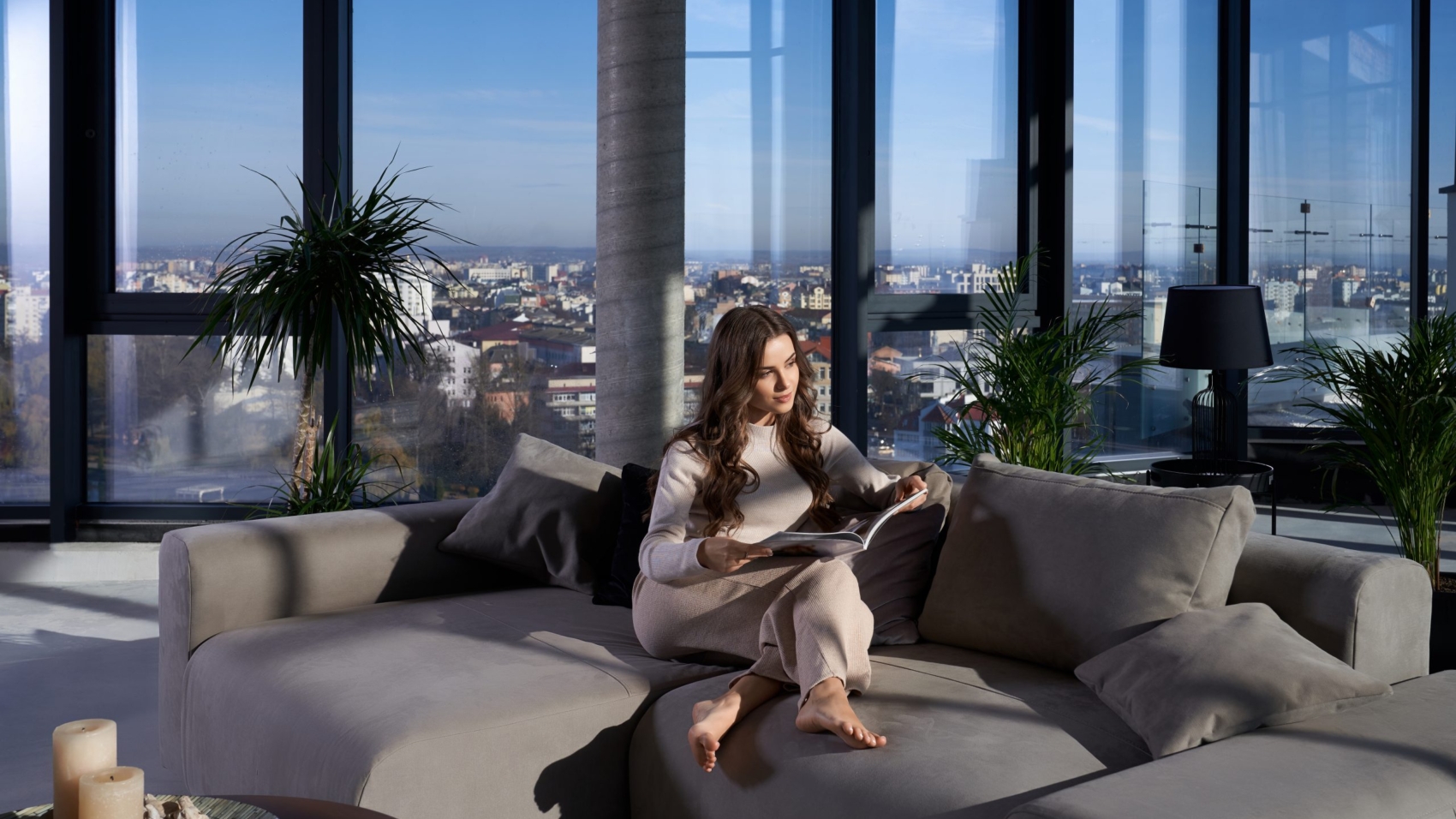
The most meaningful changes in home technology are not always the ones that attract the most attention. A new device may arrive with an impressive display, an unusual design, or a long list of features, yet the real transformation often happens quietly. A light becomes easier to control. A room feels more comfortable without constant adjustments. An appliance communicates what it needs. A familiar routine takes fewer steps.

This gradual shift represents a different way of thinking about technology inside the home. Instead of making every interaction more noticeable, modern devices increasingly aim to become part of the background. They support everyday life without demanding constant attention.

From Objects to Experiences

For decades, household technology was largely defined by individual objects. A television had a remote control. A washing machine had buttons and settings. A thermostat had a physical interface. A lamp was switched on and off manually.

Connected technology has changed that relationship.

Today, a device can become part of a broader experience rather than functioning as an isolated object. A television can become an entertainment hub. Lighting can contribute to the atmosphere of an entire room. An appliance can communicate its status through a mobile interface. A speaker can respond naturally to spoken requests.

The object itself remains important, but the experience surrounding it becomes equally significant.

This is one of the defining characteristics of modern home technology: the boundary between individual products and the environment around them is becoming less obvious.

The Disappearing Interface

One of the most interesting developments is the gradual reduction of visible controls.

Traditional technology often required people to understand exactly which button to press or which setting to change. Newer systems can offer alternative forms of interaction.

Voice commands, gestures, mobile controls, automatic responses, and contextual actions can reduce the need for traditional interfaces. Instead of navigating through several menus, a person may simply state what they want to happen.

This does not mean physical controls are disappearing entirely. They remain valuable because they are familiar, immediate, and dependable. The change is that people can increasingly choose how they interact with their surroundings.

Technology becomes less about learning the device and more about expressing an intention.

Rooms Are Becoming More Responsive

A modern room can respond to changing circumstances in ways that were difficult to achieve with traditional equipment.

Lighting can adapt to different activities. Entertainment systems can change depending on how they are being used. Environmental devices can respond to changing indoor conditions. Displays can provide relevant information when it is needed and remain unobtrusive when it is not.

The important idea is responsiveness.

A responsive environment does not necessarily perform dramatic actions. Often, the improvements are subtle. A room can feel brighter, quieter, warmer, more relaxing, or more convenient without the user consciously thinking about the technology responsible for the change.

This creates an interesting contrast with earlier generations of consumer electronics. Older technology often asked for attention. Newer technology increasingly attempts to give attention back.

Technology That Fits Human Rhythms

Every household has rhythms.

There are periods of activity, moments of rest, busy mornings, quieter evenings, and routines that repeat almost every day. Modern home technology can be designed around these rhythms rather than treating every moment as identical.

For example, lighting can reflect the changing character of the day. Entertainment systems can become part of an evening routine. Household displays can present useful information at appropriate moments rather than continuously demanding attention.

This approach places human behavior at the center of the experience.

The technology is not necessarily trying to change how people live. Instead, it can adapt to patterns that already exist.

The Importance of Small Improvements

Technological progress inside a home is often measured through major features, but small improvements can have a surprisingly large effect.

Consider the difference between repeatedly checking an appliance and receiving a simple notification. Think about the convenience of controlling several pieces of equipment without searching for multiple remotes. Even a small change in how lighting or entertainment is handled can remove a repetitive action from a daily routine.

These improvements may seem insignificant individually. Over weeks and months, however, repeated convenience can become part of the overall character of a living space.

This is where smart technology can have a more human dimension. Its value is not always found in what it can do once. It can be found in what it makes easier hundreds of times.

The Home as a Living Environment

Another shift is the growing recognition that a home is more than a collection of rooms filled with equipment.

Technology can influence how spaces feel and function throughout the day. The same room may serve as a workspace, entertainment area, dining space, or place to relax. Connected equipment can help support these different uses without requiring a complete physical transformation.

This creates greater flexibility.

Instead of designing technology around one permanent function, modern systems can accommodate changing activities. A room can become brighter for focused work, calmer for relaxation, or more engaging for entertainment through relatively simple changes in its technological environment.

The physical space remains the same, but its character can change.

When Convenience Becomes Invisible

The strongest sign that a technology has become genuinely useful may be that people stop thinking about it.

When a device works consistently and fits naturally into a routine, its presence becomes almost invisible. There is no need to celebrate every successful interaction. The technology simply performs its role.

This idea represents a major change in the philosophy of connected homes. The goal is not necessarily to make technology more visible. In many cases, the goal is precisely the opposite.

A well-designed system can reduce friction without creating new responsibilities.

A More Personal Definition of Smart

The word “smart” can sometimes suggest complexity, intelligence, or advanced specifications. In a home environment, however, its meaning can be much simpler.

A smart device can be one that understands its role within a person’s routine. A smart room can be one that supports different activities naturally. A smart environment can be one that provides useful information without overwhelming the people living inside it.

This perspective shifts attention away from the number of devices installed.

A home does not become more thoughtful simply because it contains more technology. What matters is whether that technology contributes something meaningful to everyday life.

Technology With a Human Rhythm

The future of home technology may therefore be less about dramatic machines and more about subtle interactions.

The most successful developments are likely to be those that understand when to respond, when to remain quiet, and when to let people take control themselves. They can simplify familiar tasks while preserving the comfort of human choice.

That is the quiet revolution taking place inside modern homes.

It is not necessarily about turning a house into a futuristic showcase. It is about making ordinary spaces feel more responsive, adaptable, and considerate of the people who use them.

And perhaps that is the most interesting direction for smart home technology: not making everyday life feel more technological, but making technology feel like a natural part of everyday life.